Choose a complete responsibility, name its owner, give them the information they need and agree when a change requires a handoff. Review the arrangement together rather than leaving one person to supervise it.
Choose an area with a clear boundary
“Help more” is hard to act on. “Own the school calendar and permission slips this term” is something you can discuss. For a smaller start, choose lunches for the coming week or the next appointment.
Make the boundary clear: what is included, what is shared and what needs another person’s decision. Ownership should reduce ambiguity, not give someone a job with an invisible list of exceptions.
Use four parts in the handoff
A short agreement is easier to use than a long debate repeated every week.
| Part | Example |
|---|---|
| Owner | Alex handles the activity schedule |
| Finish line | Dates, transport and required kit are visible before the week starts |
| Information | School emails, calendar access and coach contact details |
| Exception | Ask Sam before booking anything that changes Sam’s workday |
Agree a standard, then allow a method
If both adults agree what needs to happen, they may not need to do it identically. One might use a list, the other a calendar reminder. Focus on the result and the information the rest of the household needs, rather than turning every difference in method into a correction.
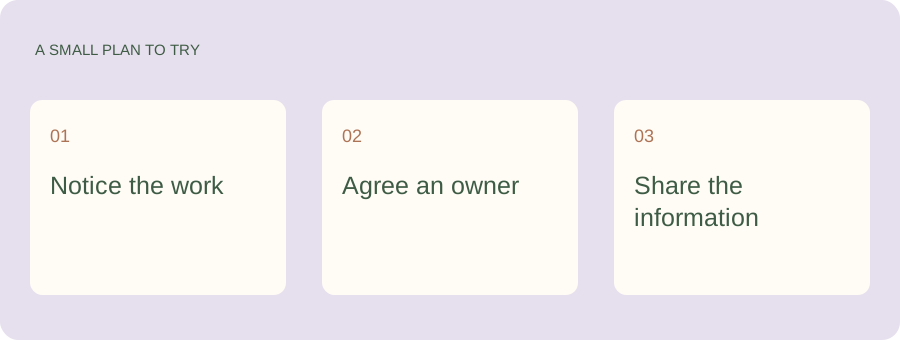
You should not have to manage the handoff forever.
Kaia sits in the shared conversation with access for every adult. Her partner load-balancing approach is built around noticing the work and helping with the handoff, so one person does not have to keep assigning every next step.
Plan the backup in advance
The owner will sometimes be ill, late or overwhelmed. Agree how they ask for cover and what information travels with the request. A good handoff includes the time, place, materials and anything still unresolved.
Use the family conversation to make that exchange visible. If Kaia helps organize the task, make the owner and deadline part of the request. “Put this on our list” and “Alex owns this by Thursday” are different instructions.
Notice the work that returns to the same person
During the first week, watch for questions that quietly move management back: where is the form, what time is it, what should I buy? Some are normal during a handoff. Repeated questions may mean the information needs a shared home or the ownership agreement needs a clearer boundary.
Make review a shared job
Set a ten-minute check-in with a simple agenda: what worked, what changed and what needs a new owner. Both adults bring the updates for their responsibilities. The meeting should not become another report one person prepares for everybody else.
When “just tell me what to do” becomes another job
Try moving the cue as well as the action. Instead of asking someone to pack the activity bag each Tuesday, agree that they check the schedule and have the bag ready for the session. Give them the information and access needed to do it.
A short handoff card can read: “Activity kit. Owner: Alex. Ready by: Tuesday collection. Information: club notice and kit list. Backup: ask Sam before Monday evening if cover is needed.” If practice moves, the owner follows the update through. The card belongs in the existing ownership worksheet, not in a separate system someone else has to maintain.
See a worked family example
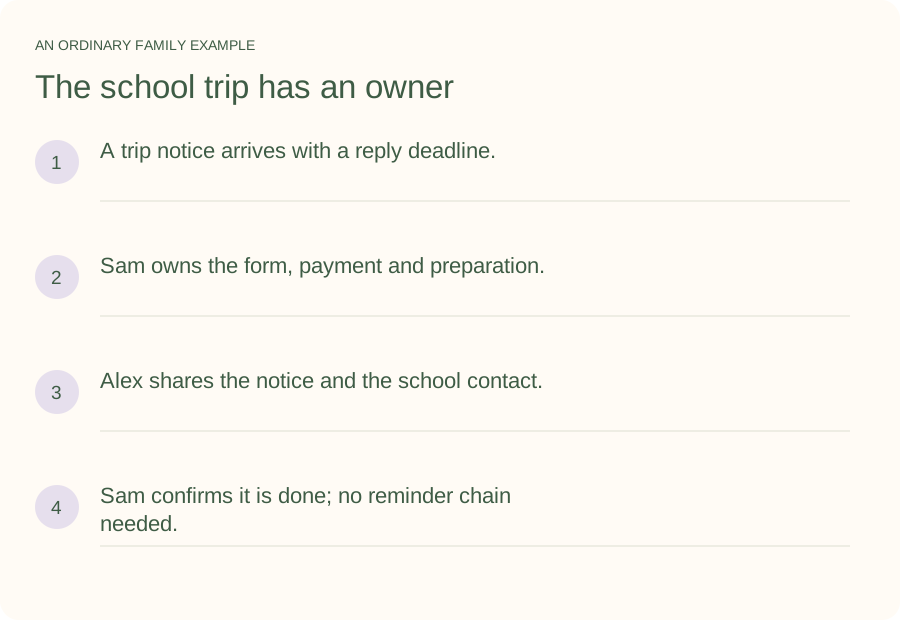
Illustrative household example; adapt the names and details to your week.
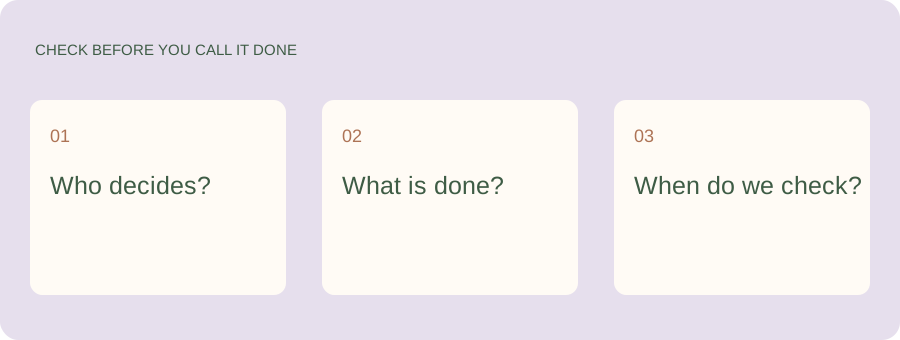
A few common questions
How do we start without a huge conversation?
Choose one recurring responsibility that causes friction, write down its full sequence and agree who owns it for the next week. A small, concrete agreement is easier to revisit than a general promise.
What if our available time is unequal?
Make that part of the agreement. Ownership can be balanced around capacity, schedules and the kind of work involved. Revisit it when circumstances change.