Set the servings, combine compatible ingredients, subtract what you already have, and group the remaining items by how you shop. Add quantities and useful substitutions so somebody else can use the list.
Set the household size first
Check how many people each recipe serves and how much you intend to make. Are you cooking extra for another meal? Feeding a visiting friend? Write that down before multiplying ingredients. Keep any uncertain quantity visible rather than silently choosing a number.
Combine like with like
Some entries can be combined neatly; others should stay separate.
| Meal-plan entries | Shopping-list version |
|---|---|
| 2 onions + 1 onion | 3 onions, less any usable ones at home |
| Milk for breakfast + milk for a sauce | Total the amounts in the same unit |
| Chopped tomatoes + fresh tomatoes | Keep separate: they serve different uses |
| Rice already in the cupboard | Check the amount before buying more |
Do one pantry check
Read the list while looking at the food you already have. Check the actual quantity, not just whether the packet exists. Include basics such as oil, seasoning and breakfast items that may not appear in the dinner recipes.
Mark an item as checked even when you do not need to buy it. That makes it easier to tell the difference between “we have enough” and “nobody has looked yet.”
Let the recipes do less work for you.
Kaia can help turn meal ideas into a grocery list and send it to Instacart. Tell her what you already have, so the list starts with the gaps rather than another jar of the thing at the back of the cupboard.
Write for the shopper who was not in the planning conversation
A list that says “yogurt” can still produce three follow-up messages. Add the amount and the preference that matters. If any brand is fine, say so. If a substitution is not acceptable, make that clear before someone stands in an aisle wondering.
Group the list without overengineering it
Produce, chilled, cupboard, freezer and household basics are usually enough. A shared list should be easy to add to when somebody uses the last of something. Agree whether checking an item means it has been bought or only put in the basket.
When asking Kaia to help with groceries, give the meal plan, serving count and what you already have. Check the resulting quantities before using a purchase or delivery handoff.
Close the loop after shopping
Mark unavailable items and substitutions where the cook can see them. If the shop changed the plan, update dinner before the next person starts preparing it. The shopping list has done its job when the kitchen has what the plan needs, not simply when every box is ticked.
See a worked family example
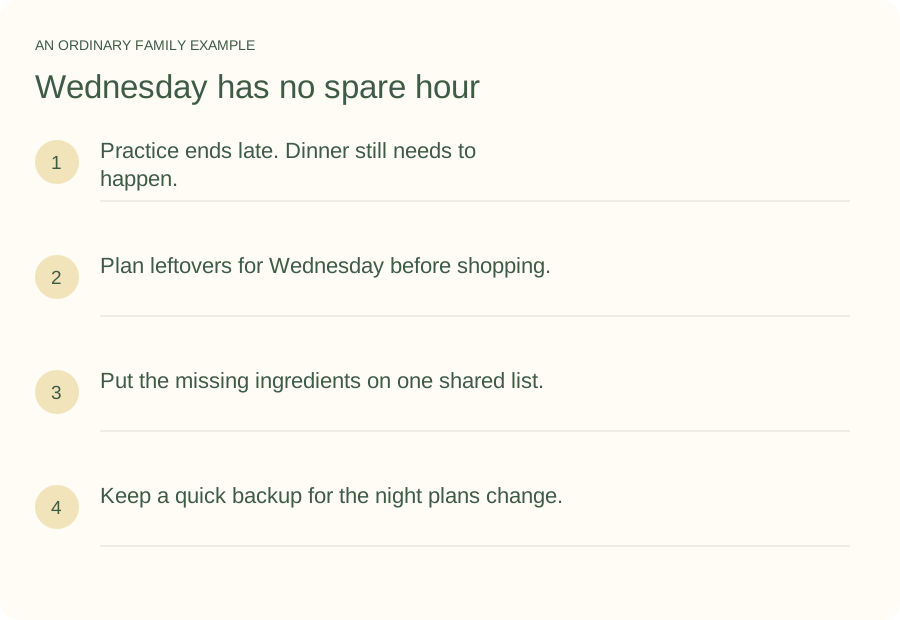
Illustrative household example; adapt the names and details to your week.
A few common questions
Can I combine ingredients from several recipes?
Yes, where the ingredient and units are compatible. Keep different preparations separate when they are not interchangeable, and check servings before totaling.
What should go on a shared grocery list?
The item, amount, important preference and any acceptable substitute. Keep the list short enough to use in the shop, with the meal plan available separately if someone needs context.