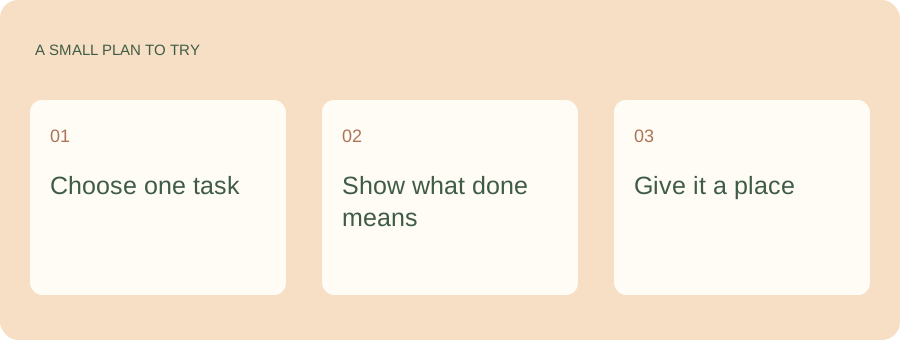
Choose a few clear responsibilities, decide whether any earn a reward, and agree how completion is recorded. Keep the reward simple, available and easy to deliver.
Separate everyday contribution from extra jobs
Some families reward chores; others treat ordinary household jobs as a shared responsibility and reward occasional extras. Either approach needs a clear agreement. Decide together rather than changing the rule while a child is halfway through the task.
For example, putting shoes away might be an everyday routine while helping sort an outgrown-clothes box is an extra project. The distinction should be easy to explain.
Keep the first chart small
Start with tasks the child knows how to do, or include a practice period. A points system cannot fix a job that has not been taught.
| Task | Clear completion | Possible simple reward |
|---|---|---|
| Pack the next day’s bag | Required items inside, bag by the door | Choose the family game |
| Help set the table | A place set for each person | Choose the dinner music |
| Finish an agreed extra project | Adult and child check the result together | An agreed outing or activity |
Choose rewards you can reliably deliver
Time together, a choice in the family routine or a modest agreed treat can be easier to maintain than an elaborate prize ladder. Avoid promising something that depends on a budget or schedule you have not checked. The reward should not become another disappointment to manage.
Give the routine a little help keeping going.
Kaia’s chores and rewards tools include a growing lemon tree for each child. You choose the rewards; Kaia helps keep the tasks and reminders moving through the week.
Let children see their progress
A simple mark on a chart may be enough. Keep it where the routine happens and let the child participate in recording it. If an adult has to remember every completed task and update it late at night, simplify the system.
In Kaia, start with the family’s agreed chores and reward approach when asking for help organizing the routine. Clear task names and owners are more useful than a long list of vague goals.
Know what a missed day means
Agree in advance how you handle illness, travel or an unusually busy evening. A chart is a support for the household, not a contract that ignores real life. If a task is routinely missed, revisit its timing and size before increasing the reward.
Retire the system when it has done its job
Some routines eventually become ordinary. You can stop tracking a settled habit and use the chart for the next thing your child is learning. There is no need to keep awarding a sticker forever because the first version had a sticker column.
See a worked family example
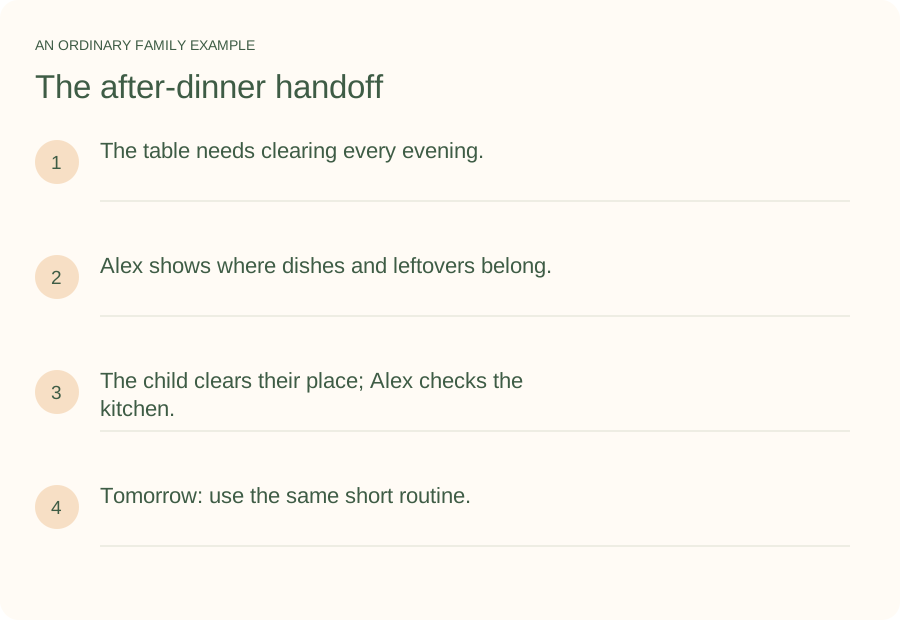
Illustrative household example; adapt the names and details to your week.
A few common questions
Do rewards have to be money?
No. Families can use choices, activities or time together, or choose not to attach rewards to everyday chores. Pick an agreement that is easy to understand and maintain.
How often should we change the rewards?
Keep an arrangement long enough to understand whether it helps. Revisit it during a calm weekly check-in rather than renegotiating every task in the moment.